


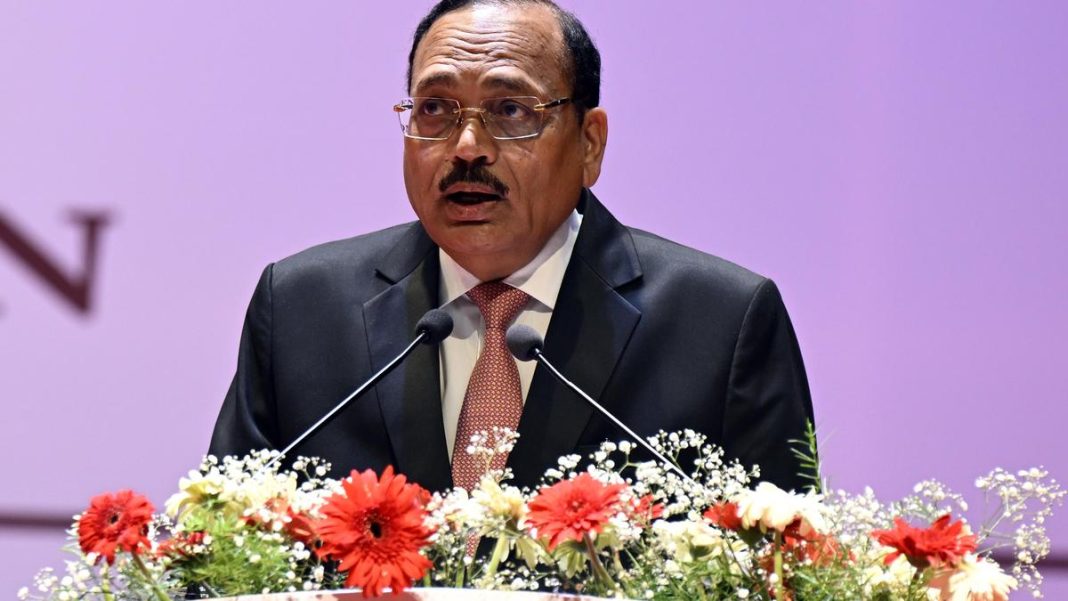
In a significant and rare show of solidarity within India’s legal fraternity, 44 retired judges, including former Chief Justices of various High Courts and Supreme Court judges, have issued a strong statement slamming what they term a “motivated campaign” against the Chief Justice of India (CJI). The campaign, according to the judges, stems from the CJI’s recent observations during a hearing concerning the deportation of Rohingya refugees from India. This public intervention underscores the escalating tensions between judicial scrutiny, human rights advocacy, and national security imperatives in a highly sensitive issue.
The Contention Surrounding Rohingya Deportation
The genesis of the controversy lies in the Supreme Court’s proceedings concerning a Public Interest Litigation (PIL) challenging the Indian government’s plans to deport Rohingya refugees. During recent hearings, the Chief Justice of India, while presiding over a bench, made certain observations and posed questions to the Solicitor General regarding the status of Rohingyas in India. Specifically, the Court sought comprehensive data on whether any Rohingya individuals were involved in illegal activities or had links to terror organizations, citing national security concerns. The CJI reportedly underscored that national security considerations must be balanced against humanitarian concerns when dealing with such matters.
These observations, however, quickly drew criticism from certain sections of civil society, human rights activists, and legal commentators. Critics argued that the judiciary, particularly its highest office, appeared to be leaning towards the government’s stance on deportation without adequately emphasizing international human rights norms or the principle of non-refoulement, which prevents the expulsion of persons to a country where they face persecution. Concerns were raised about the potential for such judicial remarks to influence public opinion and governmental action, possibly at the expense of vulnerable refugee populations.
Retired Judges Decry ‘Motivated Campaign’
Responding to this wave of criticism, the collective of 44 retired judges stepped forward with a robust defence of the Chief Justice. Their joint statement vehemently condemned what they described as a “pre-planned, motivated campaign” designed to tarnish the image of the CJI and undermine the independence and sanctity of the Indian judiciary. The judges argued that the CJI’s actions were well within the established judicial framework and were aimed at gathering all necessary facts to arrive at a balanced and just decision.
The statement highlighted that seeking information on national security implications, especially in matters concerning illegal immigration, is an inherent part of the judicial process. They emphasized that a court’s duty is to consider all facets of a case, including the concerns raised by the executive branch regarding national security, without prejudging the outcome. The retired judges collectively asserted that judicial observations during a hearing, particularly when directed at the executive to furnish data, should not be misconstrued as a final pronouncement or a biased stance.
“The orchestrated attempts to create a narrative that the Chief Justice of India is insensitive to human rights or has a pre-determined view on the Rohingya issue are not only factually incorrect but also a malicious endeavour to erode public trust in the judiciary,” the statement declared. They further asserted that such campaigns represent a dangerous trend of politicizing judicial proceedings and individual judges, which could have serious ramifications for the institutional integrity of the judiciary.
Upholding Judicial Independence and Integrity
The intervention by such a significant number of retired judicial figures underscores the deep concern within the legal community regarding perceived attacks on judicial independence. Their statement serves as a powerful reminder that the judiciary, as a pillar of democracy, must be allowed to function without undue external pressure or politically motivated criticism. While legitimate scrutiny and constructive criticism are vital for any public institution, the retired judges drew a clear distinction between such healthy debate and what they deemed as a targeted smear campaign.
The ongoing legal battle over the fate of Rohingya refugees in India remains complex, balancing humanitarian obligations under international law with domestic concerns about national security and sovereignty. The Supreme Court’s eventual ruling will undoubtedly have far-reaching implications. In the interim, the strong defence mounted by 44 retired judges has added another layer to the intricate debate, reaffirming the judiciary’s resolve to operate impartially, even when faced with intense public and political scrutiny.
The episode highlights the delicate balance the judiciary must strike in a vibrant democracy: ensuring justice for all, upholding the constitution, and safeguarding national interests, all while maintaining its perceived neutrality and independence in the face of contentious issues.

