


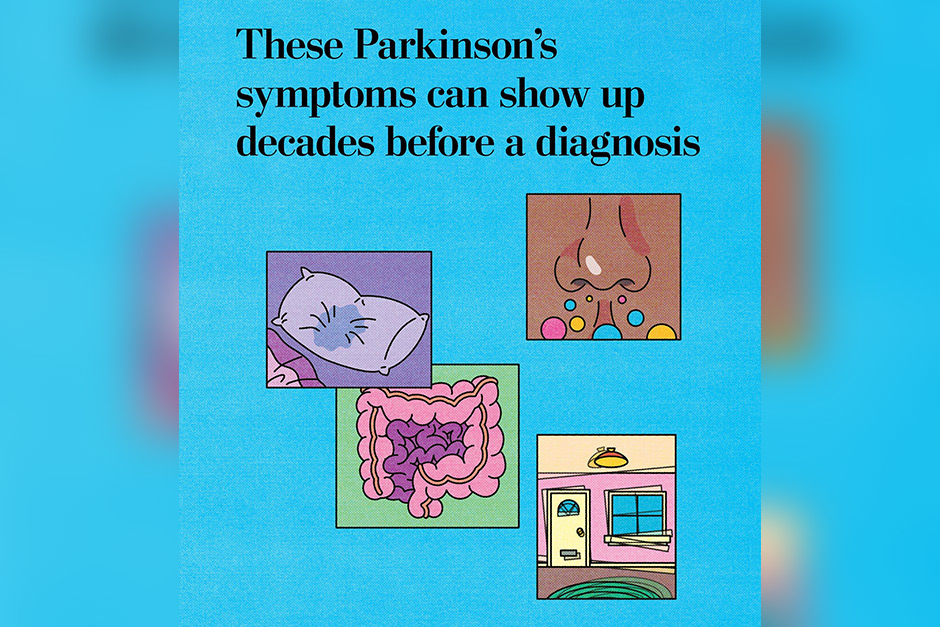
Imagine your body dropping subtle hints, not for days or weeks, but for years – even decades – before a significant health change truly takes hold. For Parkinson’s disease, a progressive neurodegenerative condition, this isn’t science fiction. Emerging research suggests there are a handful of quiet, often dismissed symptoms that can emerge long before the more recognizable motor tremors or rigidity.
These early indicators are like whispers, easily mistaken for the stresses of modern life or simply “getting older.” But understanding these potential early warnings isn’t about fostering anxiety; it’s about empowering awareness and encouraging proactive conversations with healthcare professionals. It’s about recognizing that your body often communicates long before it shouts.
Beyond the Obvious: Unpacking Subtle Shifts
When we think of Parkinson’s, vivid images of tremors often come to mind. However, some of the earliest signs aren’t motor-related at all. They’re non-motor symptoms, affecting everything from your senses to your sleep.
A Fading Sense of Smell and Restless Nights
One of the most common and earliest non-motor symptoms is a significant loss of the sense of smell, known as anosmia. This isn’t just about occasionally struggling to identify a scent; it’s a persistent difficulty in detecting or differentiating odors that might have been distinct to you before. Imagine no longer truly smelling your morning coffee, or struggling to pick out the distinct aromas in your favorite dish. This can precede a Parkinson’s diagnosis by 10 to 20 years.
Another striking early indicator is REM Sleep Behavior Disorder (RBD). Most of us are temporarily paralyzed during REM sleep, preventing us from acting out our dreams. People with RBD, however, lose this paralysis and physically act out their vivid and often violent dreams. They might punch, kick, shout, or even jump out of bed. This isn’t just restless sleep; it’s a clear, observable pattern that can be frightening for both the individual and their bed partner, and studies show it’s a strong predictor for future neurodegenerative diseases, including Parkinson’s.
Digestive Discomfort and Changing Calligraphy
The gut-brain connection is an increasingly studied frontier in health, and it plays a significant role in early Parkinson’s signs.
Chronic Constipation and Tiny Writing
Persistent, unexplained constipation can be a prodromal (early-stage) symptom of Parkinson’s. This isn’t just an occasional bout of digestive sluggishness; it’s a chronic issue that can begin many years, even decades, before motor symptoms appear. The gut has its own complex nervous system, and changes there can often mirror early neurological shifts in the brain.
Then there’s the subtle shift in fine motor skills, manifesting in your handwriting. Micrographia, or handwriting that becomes noticeably smaller and more cramped over time, can be an early sign. You might find your signature shrinking, or that your words trail off in size as you write a sentence. Similarly, a softening or lowering of the voice (hypophonia) can also be an early, subtle motor symptom, often dismissed as simply being tired or quiet. “Many of these early signs are so subtle, people often attribute them to aging or stress,” notes Dr. Evelyn Reed, a neurologist specializing in neurodegenerative diseases. “But when they appear together, or are significantly bothersome, they warrant a closer look.”
The Power of Early Awareness
It’s crucial to remember that having one or even a few of these symptoms does not automatically mean a Parkinson’s diagnosis is imminent. They can be caused by many different factors, and often, they are simply isolated occurrences. However, when these symptoms appear persistently, collectively, or significantly impact daily life, they can be important clues. This isn’t about self-diagnosing or panicking, but about empowering yourself with knowledge. If you notice these persistent changes in yourself or a loved one, a conversation with a doctor is always a good idea. Awareness is the first step toward understanding, and potentially, toward earlier intervention and better management down the line.

