


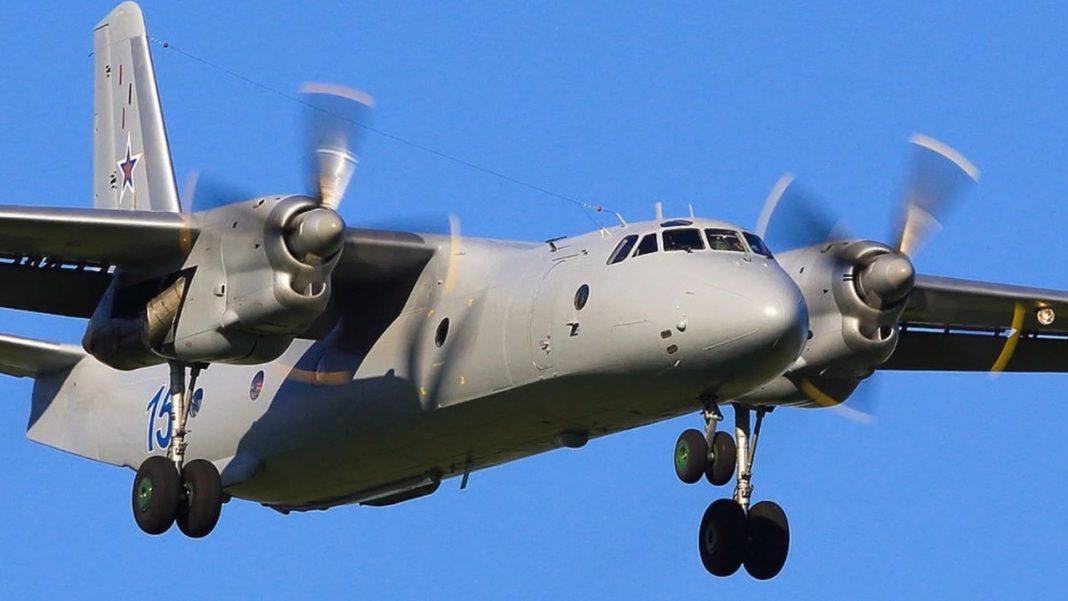
A somber day for military aviation has seen 29 lives lost after a Russian An-26 military transport aircraft crashed into a cliff in Crimea. The tragic incident, occurring in the early hours, sent shockwaves through the international community, prompting immediate rescue operations and the initiation of a high-level investigation into the causes of the catastrophic failure. As details slowly emerge from the rugged terrain of the Crimean peninsula, the focus remains on understanding the circumstances that led to this devastating loss of life and the implications for military aviation safety globally, a subject of particular relevance in India given its vast and active air force.
Tragedy Strikes in Crimea: An-26 Crash Details
The incident unfolded in a remote, mountainous area of Crimea, a region that has been under Russian control since 2014. According to preliminary reports from the Russian Ministry of Defence, the Antonov An-26 aircraft, a twin-engined turboprop used primarily for military transport, was on a scheduled flight when it veered off course and impacted a cliff face. All 29 personnel on board, comprising crew members and passengers, perished in the crash. The impact site, characterized by its difficult terrain, presented significant challenges for initial emergency responders and recovery teams. While the exact time of the crash has been pinpointed, details surrounding the plane’s flight path and any distress signals remain part of the ongoing investigative efforts.
Eyewitness accounts, though scarce given the remote location, suggest that weather conditions in the area at the time were not ideal, with reports of low visibility and gusty winds. However, investigators are careful not to jump to conclusions, emphasizing that all potential factors – from technical malfunction and pilot error to adverse weather – are being rigorously examined. The An-26, a workhorse of the Soviet and Russian air forces since the 1970s, has a long service history, underscoring the need for a thorough technical analysis of the specific aircraft involved.
The Unfolding Investigation and Russian Response
In the immediate aftermath of the crash, the Russian Ministry of Defence dispatched multiple search and rescue teams, including specialized mountain units and air assets, to the crash site. The Russian Investigative Committee has launched a criminal case, a standard procedure for aviation incidents involving military aircraft, to determine if any regulations or safety protocols were violated. Experts from various fields, including aviation safety, metallurgy, and meteorology, have been mobilized to contribute to the inquiry.
Recovery efforts have focused on locating the flight recorders, commonly known as ‘black boxes,’ which are crucial for reconstructing the final moments of the flight. These devices contain vital data on the aircraft’s performance parameters, cockpit conversations, and air traffic control communications. The Russian government has expressed its deepest condolences to the families of the deceased, promising full support and assistance during this difficult time.
A senior official from the Russian Ministry of Defence, speaking on condition of anonymity due to the ongoing investigation, stated, “Our absolute priority is to ascertain the precise sequence of events that led to this tragic loss. Every piece of evidence, from the wreckage to flight data, will be meticulously analyzed to ensure the truth emerges and lessons are learned to prevent future occurrences.” This commitment underscores the gravity of the incident and the systemic approach being taken to address it.
Global Aviation Safety Concerns and India’s Perspective
The incident in Crimea serves as a stark reminder of the inherent risks associated with military aviation, even with modern advancements in technology and training. For countries like India, which operates one of the largest and most diverse air forces in the world, such incidents resonate deeply. The Indian Air Force (IAF) continually strives for the highest standards of flight safety, investing heavily in pilot training, maintenance protocols, and technological upgrades to its vast fleet, which includes Russian-origin aircraft. While India has its own robust safety mechanisms and audit procedures, the international community often shares insights and learnings from such incidents to enhance global aviation safety.
The crash also subtly touches upon geopolitical sensitivities in the region. While the primary focus remains humanitarian and investigative, any incident in Crimea attracts global attention due to its disputed status. For India, a nation that prioritizes regional stability and adheres to international law, observing such events from a neutral, fact-based perspective is crucial. The larger narrative around aviation safety, however, transcends political boundaries, reinforcing the need for continuous vigilance, rigorous maintenance, and comprehensive training across all air forces worldwide to safeguard precious lives and national assets.
As the investigation into the An-26 crash progresses, the world watches, hoping for clear answers that can contribute to safer skies. The tragic loss of 29 lives underscores the profound responsibility carried by those who operate and maintain military aircraft, a responsibility that is universally understood and valued.

