


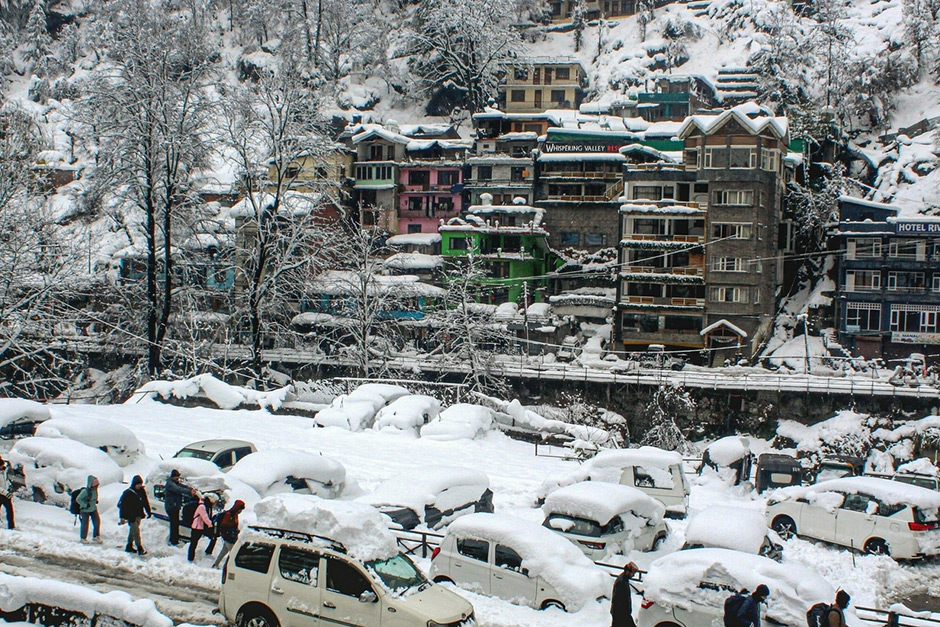
Manali, the picturesque jewel nestled in Himachal Pradesh’s Kullu Valley, typically beckons visitors with its serene snow-capped peaks and vibrant local culture. However, as the New Year approached, this idyllic image for many tourists and local residents alike dramatically transformed into a challenging ordeal. The region, battered by heavy snowfall and an unprecedented surge of holidaymakers, found itself reeling under a 15-kilometre traffic jam, severe power outages, and critical water shortages.
The Winter Wonderland Turns Woeful
The first week of the New Year brought with it not just fresh snowfall, but also a wave of chaos that has left thousands stranded and basic services crippled. What started as a dream destination for many seeking a winter wonderland experience quickly devolved into a nightmare of gridlock and deprivation. The primary artery leading into and out of Manali became a massive parking lot, with vehicles inching along, or often, not moving at all, for hours on end. Reports indicated a 15-kilometre snarl stretching from Manali town towards the Atal Tunnel and beyond, trapping tourists who were either trying to enter or exit the popular hill station.
Compounding the traffic nightmare were the fundamental breakdowns in civic amenities. Heavy snowfall, while beautiful, wreaked havoc on power lines, leading to widespread and prolonged electricity cuts. For residents and tourists alike, this meant shivering in sub-zero temperatures without heating, struggling with limited lighting, and facing difficulties in communication as mobile networks suffered due to power interruptions. Adding to the misery, the water supply was severely impacted, with many areas experiencing erratic or no water at all, making even basic hygiene a significant challenge.
The situation left thousands of tourists, many travelling with families and young children, in dire straits. Hotels and guesthouses, initially booked to capacity, struggled to manage without consistent power and water, impacting their ability to provide basic services. Local shopkeepers also felt the pinch, with supply chains disrupted and customers scarce due to the prevailing conditions.
Infrastructure Under Siege: A Predictable Crisis
The current crisis in Manali is not merely a consequence of harsh weather; it’s a stark revelation of the fragility of its infrastructure when faced with an overwhelming tourist influx. The allure of fresh snowfall, combined with the extended New Year weekend, acted as a magnet, drawing an unsustainable number of vehicles and people into the valley. Manali’s existing road networks, designed for a different era and volume, are simply not equipped to handle such a massive surge.
The bottlenecking on narrow roads, limited parking facilities, and the sheer volume of private vehicles and tourist buses contributed significantly to the unprecedented jam. Snow clearance operations, while underway, struggled to keep pace with continuous snowfall and the relentless flow of traffic, making an already difficult situation almost insurmountable for local authorities.
“Every year, it’s the same story, but this time it feels worse,” laments Sunita Devi, a local guesthouse owner in Manali. “We welcome tourists, but the chaos impacts our livelihoods and daily lives too. We need better planning, not just during peak season, but year-round, to manage the crowds and strengthen our services.” Her words echo the sentiment of many locals who, despite depending on tourism, bear the brunt of an unsustainable model.
The administrative challenges are formidable. Managing crowd control, ensuring timely snow removal, restoring power and water, and coordinating emergency services in such conditions require robust preparedness that appears to have been stretched beyond its limits. The lack of alternative routes further exacerbated the problem, leaving no easy escape for those caught in the gridlock.
Charting a Sustainable Path Forward
The Manali crisis serves as a stark reminder of the delicate balance between tourism promotion and the preservation of a fragile ecosystem and its resident communities. While the immediate focus remains on restoring normalcy and assisting stranded individuals, the incident underscores an urgent need for long-term strategic planning.
Future solutions must encompass more than just reactive measures. This includes investing in robust, all-weather infrastructure, improving traffic management systems, and exploring sustainable public transport options to reduce reliance on private vehicles during peak seasons. Furthermore, there is a critical need for effective disaster management protocols that are regularly updated and tested, ensuring better coordination between various agencies during emergencies.
Ultimately, ensuring Manali’s future as a cherished tourist destination requires a commitment to sustainable tourism practices. This means not only protecting the natural beauty that draws visitors but also safeguarding the well-being of its residents and ensuring that the charm of the ‘Queen of Hills’ isn’t overshadowed by operational chaos. The current challenges offer a valuable, albeit harsh, lesson in preparedness and responsible tourism for one of India’s most beloved hill stations.

